How was menstruation handled in Medieval times?
What did women do in the Middle Ages when they had their period?
they used a garment that looked something like a bikini bottom.This garment would be lined with rags. if the woman was very poor, it might be lined with moss or some other absorbent fiber. Most women would have laundered the rags after use and stored them for the next month’s usage.
Throughout history, girls and women endured the dreaded monthly visitor, and the medieval era was certainly no exception. As we reflect back on what we know about hygiene in the Middle Ages, we naturally feel empathy for the medieval maidens who had to suffer through their monthly cycles without the modern conveniences of pads, panty liners, and tampons. Menstruating in the Middle Ages was a vastly different experience than it is today. Lest we feel too sympathetic towards our sisters in antiquity, we should examine these differences and the innovative ways that these women dealt with Eve’s curse.
To start, medieval women had fewer periods than today’s women. The reason for this is threefold. First, although the average age of puberty then is not much different than today, (between 12 and 14 years of age), women reached menopause earlier, often in their late thirties. Second, fewer medieval women had regular monthly periods. Poor nutrition and hard work meant that many women had low body fat. A woman needs to have some amount of body fat or her reproductive system slows down and menstruation ceases. Today, this is only problematic for girls suffering from eating disorders or competitive athletes like distance runners or gymnasts. Lastly, mothers in the Middle Ages typically had more children and breastfed their children longer. Breastfeeding stymied menstruation. All this means that, over the course of her lifetime, medieval women had vastly fewer periods to contend with than today’s females.
Yet, they did have periods and they needed some way to handle the menses mess without the feminine hygiene products we have today. Medieval women had two choices, much like we do today: she could find a way to catch the flow after it left her body, or find a way to absorb it internally. In our modern words, medieval women could use a makeshift pad or a makeshift tampon. Pads were made of scrap fabric or rags (hence, the phrase “on the rag”). Cotton was preferred because the material absorbs fluids better than the alternative, wool. Wool not only repels liquids, but it is itchy and uncomfortable. (And menstruation is uncomfortable enough!) Medieval ladies then had to devise ways to keep the pad in place as panties and underwear were not yet popular. There is some archeological evidence to show us that some women may have worn panty-like garments to hold the menstrual pad. Women could also wind cotton fabric around a twig and use it as a proto-tampon.
Here is an interesting side note: A common type of bog moss found throughout medieval England, sphagnum cymbifolium, is remarkably absorbent. It was used as stuffing for menstrual pads, as toilet paper, and as a battlefield dressing for wartime wounds. The popular name for this moss is blood moss; etymologists contend that this moniker comes from its use in battlefield first-aid. This account, of course, oozes of heroism and masculinity. But is more likely the case that blood moss earned its name by helping medieval women with their uniquely feminine problem.
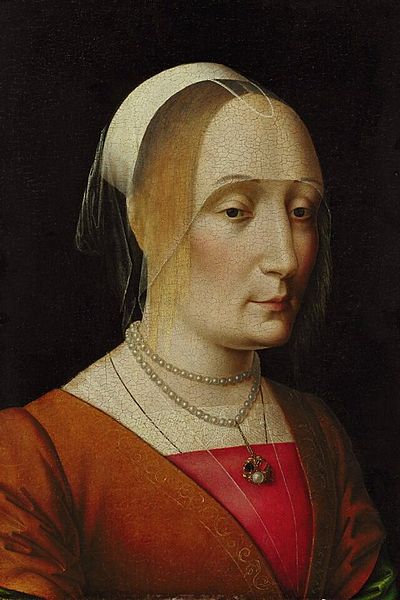
Whether they chose a homemade pad or a homemade tampon, medieval women worried about leaks and stains. This is a main reason why red was a popular color for medieval petticoats. The scarlet color was not only fashionable and decorative, but also functional as to disguise the menses.
So, instead of having the luxury of visiting the drugstore to pick up supplies for the monthly visitor, medieval women turned to nature. Or, she simply wore red.
No comments